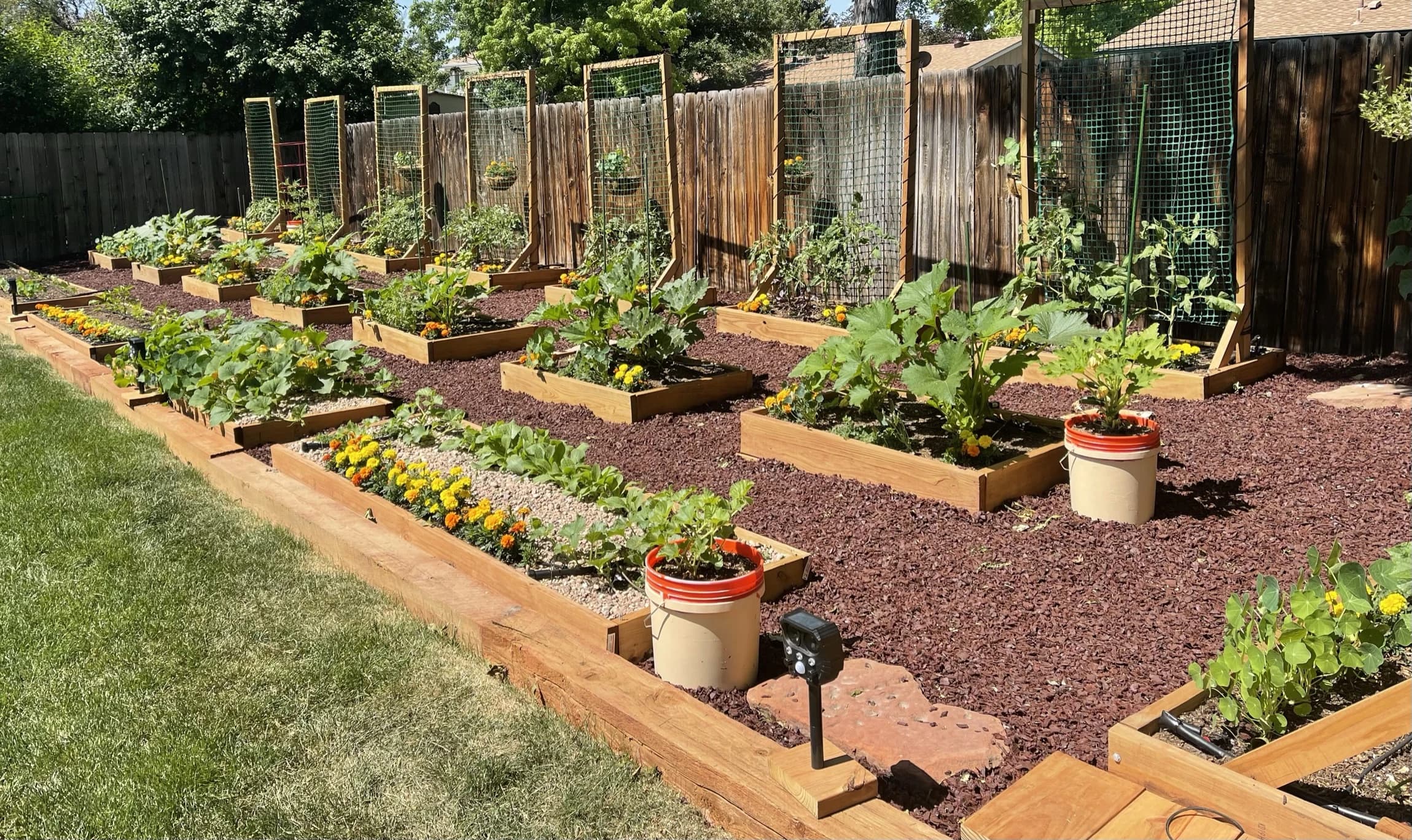
Raised Bed Command Center
Everything you need to plan, build, and run a productive raised bed system in Denver's climate.
Quick Reference
Bed Sizing Guide
The Standard
4 × 8 ft
Best for: Most home gardeners
Maximum reach from both sides, fits standard lumber, enough space to rotate crops.
The Deep Bed
4 × 12 ft
Best for: Serious producers
More growing space, same reach principle. Stays 4 ft wide.
The Compact
4 × 4 ft
Best for: Small spaces, beginners
Easiest to manage, great for one crop focus or a balcony setup.
The Flex
3 × 6 ft
Best for: Odd spaces
Works around existing structures without wasting material.
Soil
What Goes In the Bed
Base Layer
Compost
30% of total volume
The engine of the system. Quality here determines everything downstream.
Structure Layer
Screened Topsoil
60%
Holds moisture and provides mineral structure. Buy bulk from a landscape supplier.
Amendment Layer
Perlite or Vermiculite
10%
Drainage and aeration. Critical for Colorado's heavy rain events.
Specific ratios matter less than input quality. Cheap bagged soil produces cheap results.
Zone 5b · Season Schedule
Seasonal Timeline for Denver Raised Beds
Video Library
Watch: Raised Bed Systems & Soil




Proof-first gardening from Wheat Ridge.
Every raised bed technique on this page has been tested in Zone 5b Denver conditions. Watch the builds and results on YouTube.
Watch on YouTube