Pick a symptom. Get the diagnosis. Fix it this season.
How to use: Filter by category (Leaves, Fruit, Roots, Stems, Growth, Pests) → click a symptom card → read the diagnosis and step-by-step fix.
21 symptoms shown
Dark, leathery sunken patch develops on the bottom of the fruit — caused by inconsistent watering disrupting calcium delivery, not by calcium-deficient soil.
Fruit develops with severe puckering, scarring, or open holes near the blossom end — caused by cold temperatures during pollination, most common on first fruits of the season.
Radial or concentric cracks appear on ripe or ripening fruit — caused by rapid water uptake after a dry spell, common wherever heavy rain follows a dry period.
Tomato ripens everywhere except the top shoulder, which stays green, yellow, or hard — caused by heat and UV inhibiting lycopene production, plus some variety genetics.
White or pale yellow papery patches appear on the sun-exposed side of developing fruit — a sunburn caused by direct sun exposure, most common after canopy loss from pruning or disease.
Plant grows large and lush with deep-green leaves but very few tomatoes — almost always a nitrogen over-application problem in well-amended raised beds.
Seedlings grow tall and spindly with long internodes and thin stems that can't support themselves — caused by insufficient light during the indoor growing period.
Plant flowers abundantly but flowers drop without setting fruit — temperature extremes outside the 55–95°F pollination window are the most common cause.
Leaf margins turn brown and papery, working inward from the edge — typically heat stress, wind desiccation, or irregular watering in hot, dry, or windy conditions.
Leaves roll or cup upward — may be harmless physiological stress in summer heat, or a sign of virus, broad mite damage, or aphid feeding depending on which leaves are affected.
Leaf undersides develop a purple or reddish-purple tint — almost always phosphorus unavailability due to cool soil temperatures or high soil pH, especially with young transplants.
White or gray powdery spots spread across leaf surfaces — powdery mildew, most active in late summer when warm days meet cool nights.
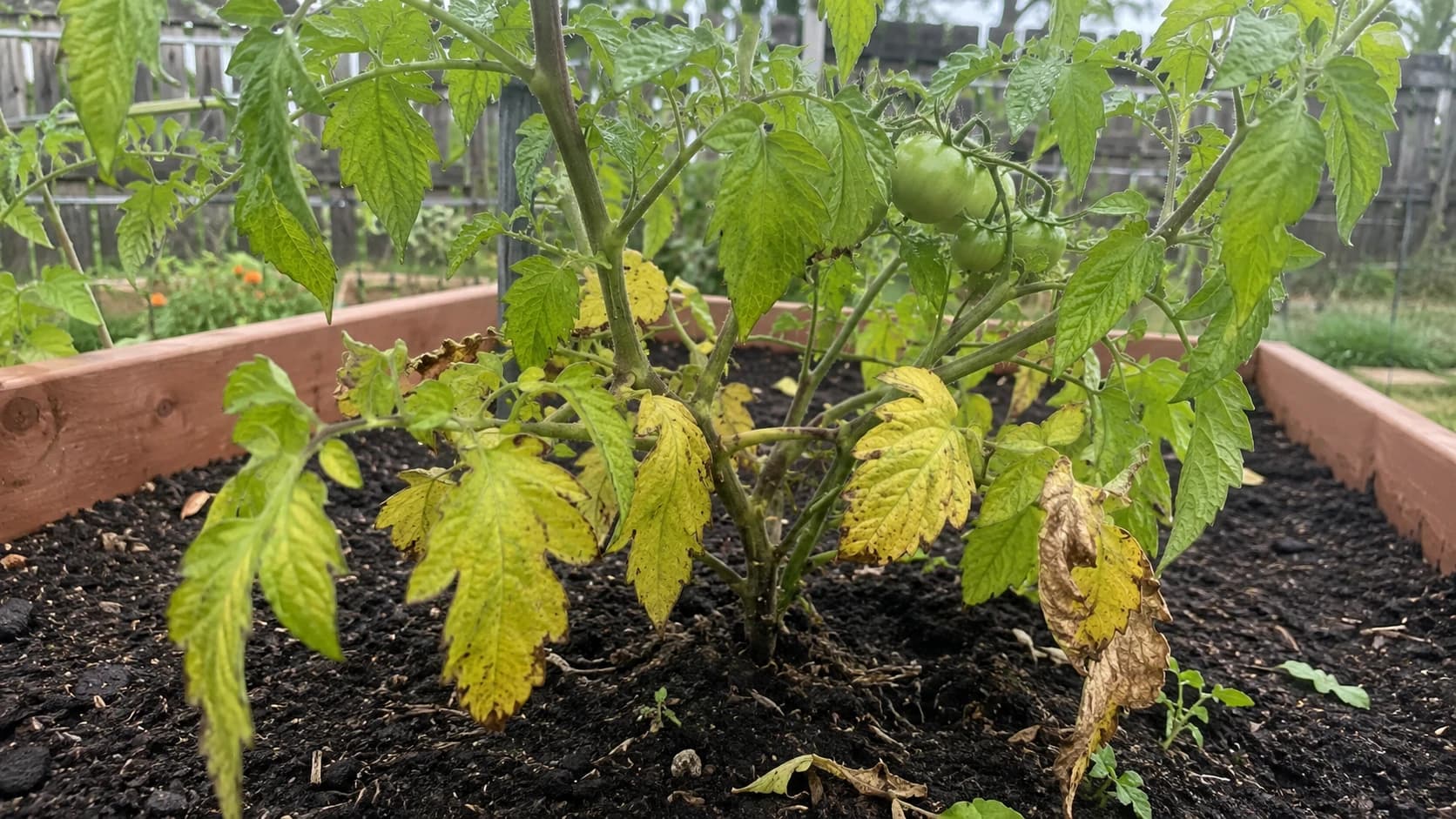
Lower leaves turn pale yellow from the bottom of the plant upward — usually a nitrogen deficiency or normal leaf senescence as the plant matures.
Dense clusters of soft-bodied green, black, or yellow insects on new growth and leaf undersides — aphids weaken plants and are the primary vector for mosaic virus.
Dozens of tiny round holes scattered across leaves, giving a shotgun-blast appearance — flea beetles are a spring pest that can damage seedlings but rarely threatens established tomato plants.
Foliage disappears rapidly with large irregular bite marks and dark green pellet droppings — tomato hornworm can strip a plant bare in 48 hours and is perfectly camouflaged.
Leaves develop a dusty bronze or silver stippled appearance — spider mites thrive in hot, dry weather and populations can double every 3–4 days if untreated.
Plant wilts suddenly despite moist soil, and roots are brown, mushy, or foul-smelling — Pythium or Phytophthora water mold from overwatering or poor drainage.
Plant wilts in afternoon heat but partially recovers overnight, grows slowly, and has no obvious above-ground disease — often Fusarium or Verticillium wilt infecting the vascular system.
Concentric brown ring (target-spot) lesions on lower leaves and stems — Alternaria early blight is one of the most common tomato diseases in home gardens; manage it rather than try to eliminate it.
Dark, sunken lesions appear on the main stem and may girdle it — either Botrytis gray mold (common in cool, humid spring conditions) or bacterial canker, both serious.
See the full raised bed setup guide, Denver planting calendar, and soil prep deep-dives — everything you need to grow great tomatoes in Zone 5b.